


Healthcare Provider Achieves 95% Accuracy in Patient Triage with AI-Powered Diagnostic Chatbot
Industry Healthcare
-

$10B+ Client Revenues
-
12+ Successful Years
-
1000+ IT Ninjas
-

5000+ Projects

$10B+ Client Revenues

12+ Successful Years

1000+ IT Ninjas

5000+ Projects
"Developers.dev didn't just build us a chatbot; they built us a clinical-grade AI tool that has revolutionized our patient intake. Their team's meticulous attention to detail regarding HIPAA compliance and clinical data accuracy was outstanding. Our patient satisfaction scores have increased by 20%, and our clinics are running more efficiently than ever."

Chief Operating Officer, MedPoint Urgent Care
A large network of urgent care clinics in the United States, serving millions of patients annually. The organization was struggling with inefficient patient intake processes, leading to long wait times and inconsistent preliminary diagnoses. They aimed to create a digital front door that could intelligently guide patients to the right level of care-be it a virtual consultation, an in-person visit, or self-care advice-before they ever set foot in a clinic.

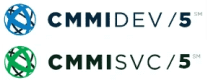




The client's manual patient triage process was labor-intensive and prone to error. They needed an automated solution that could collect patient symptoms, analyze them against a medical knowledge base, and provide a reliable preliminary assessment to streamline clinic operations and improve patient outcomes.

The AI's recommendations had to be extremely accurate and safe, with a clear protocol for escalating high-risk cases.
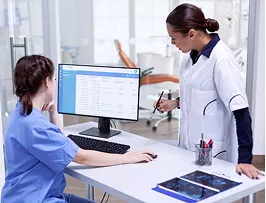
The entire solution, from data collection to storage, had to be fully compliant with HIPAA regulations.
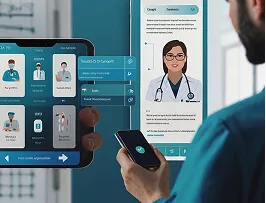
The chatbot interface needed to be empathetic, intuitive, and easy for non-technical users to interact with.

The system had to integrate seamlessly with the client's existing Electronic Health Record (EHR) system.

We deployed our "Conversational AI / Chatbot Pod" and "Healthcare Interoperability Pod" to architect a comprehensive, compliant, and intelligent triage solution.
We built a custom Natural Language Understanding (NLU) engine trained on a vast corpus of anonymized medical literature and patient dialogues to accurately interpret patient-described symptoms.
We developed a knowledge graph of diseases, symptoms, and risk factors, which the AI uses as a reasoning engine to generate potential diagnoses and care recommendations.
The solution was built on a HIPAA-compliant AWS infrastructure, with end-to-end encryption and strict access controls.
We developed a secure API using the HL7/FHIR standard to allow the chatbot to create preliminary patient records in the client's EHR system, saving valuable time for clinical staff.

Worked closely with the client's medical staff to define the triage logic and escalation pathways.

Trained the NLU model on millions of lines of anonymized medical text to ensure it understood clinical terminology.

Designed the conversation flow to be reassuring and clear, avoiding alarming or overly technical language.

Conducted several rounds of testing where clinicians role-played as patients to validate the AI's accuracy and safety.

Built and tested the FHIR-based API for EHR integration in a sandboxed environment.

Launched the chatbot as a pilot on the websites of three clinics, collecting feedback for refinement before a network-wide rollout.
In post-triage reviews, clinicians confirmed the AI's care recommendation was appropriate in 95% of cases.
By completing intake and documentation before the patient arrived, average clinic wait times were reduced by nearly a third.
Clinics were better able to prepare for incoming patients, ensuring the right staff and equipment were available.
Patient feedback showed a 20% increase in satisfaction scores related to the intake and waiting process.

This project highlights Developers.dev's capability to tackle challenges in highly regulated and complex domains like healthcare. By combining our expertise in Conversational AI with a deep understanding of industry-specific requirements like HIPAA and EHR integration, we delivered a solution that improved operational efficiency and patient care simultaneously.