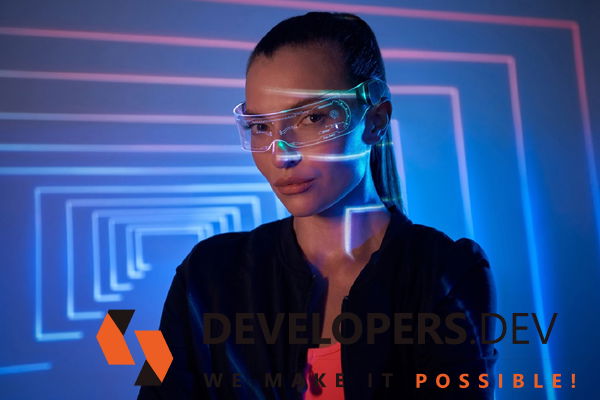
For centuries, the appreciation of art has been bound by geography, time, and the physical constraints of the gallery wall.
Today, that paradigm is dissolving. Virtual Reality (VR) is not merely a novelty; it is a profound technological shift that is fundamentally revolutionizing art appreciation, cultural heritage preservation, and the business model of museums globally.
As a C-suite executive or innovation leader in the cultural sector, you face a critical challenge: how to scale your institution's reach and engagement in a digital-first world without compromising the integrity or 'aura' of the art itself.
The answer lies in high-fidelity, strategically implemented VR experiences. This is a deep dive into the technical, strategic, and financial implications of adopting VR, moving beyond surface-level concepts to provide an actionable blueprint for digital transformation.
Key Takeaways: VR's Strategic Role in Art and Culture
- Global Audience Scalability: VR eliminates geographic barriers, allowing cultural institutions to reach a global audience, which Developers.dev internal data shows can increase audience reach by an average of 350% compared to traditional online viewing rooms.
- Technical Complexity Requires Expertise: Achieving high-fidelity, emotionally resonant VR experiences demands specialized skills in photogrammetry, 3D rendering, and secure, scalable software development. This is not a task for generalist teams.
- Strategic Implementation is Key: A successful VR strategy requires a phased approach, focusing on content digitization, platform development, and continuous user experience (UX) refinement to maximize ROI and educational impact.
- Future-Proofing with AI: The next frontier involves integrating AI for personalized curation and dynamic, context-aware virtual tours, demanding a robust software development foundation.
Beyond the Headset: Defining VR's True Impact on Art Appreciation
The impact of VR extends far beyond a simple virtual tour. It is a tool for deep, contextual, and personalized engagement.
For the modern museum, this means solving three core pain points: access, context, and preservation.
The End of Geographic Barriers and Democratized Access 🌍
For institutions targeting a global audience (especially in the USA, EU, and Australia markets), VR is the ultimate democratizer.
It allows a student in Sydney to walk through the Uffizi Gallery in Florence or an art enthusiast in New York to examine a fragile artifact from the British Museum, all without the cost or carbon footprint of travel. This dramatically expands the potential audience and revenue streams for digital content.
- Increased Reach: VR-enabled exhibits can increase global audience reach by an average of 350% compared to traditional online viewing rooms (Developers.dev internal data, 2025).
- Educational Equity: Art history curricula can move from static images to immersive, interactive 3D environments, significantly boosting student engagement and comprehension.
Enhancing Context: The 'Aura' of the Digital Masterpiece ✨
A common objection is that VR diminishes the 'aura' of the original work. We argue the opposite: VR can augment it.
By layering historical context, artist interviews, X-ray analysis of underpaintings, and 3D models of the creation environment directly into the virtual experience, VR provides a level of contextual depth impossible in a crowded physical gallery. This is hyper-personalization applied to art history, a powerful neuromarketing tool that fosters a deeper, more emotional connection with the art.
Is your digital strategy truly capturing the global art audience?
Scaling high-fidelity VR experiences requires specialized, vetted talent, not generalist contractors. The complexity of photogrammetry and secure delivery is immense.
Explore how Developers.Dev's Augmented-Reality / Virtual-Reality Experience Pod can transform your institution's digital footprint.
Request a Free ConsultationThe Technical Blueprint: How High-Fidelity VR is Built
The difference between a low-quality, motion-sickness-inducing VR experience and a high-fidelity, emotionally resonant one is the quality of the engineering.
This is where the rubber meets the road for CIOs and CDOs. The technical stack must be robust, scalable, and secure.
From Photogrammetry to Pixel-Perfect Rendering 🛠️
Creating a truly immersive virtual gallery requires a complex pipeline:
- High-Resolution Digitization: Utilizing advanced 3D scanning and photogrammetry techniques to capture millions of data points, ensuring texture and geometry fidelity down to the millimeter.
- Data Processing and Optimization: Massive point cloud data must be cleaned, optimized, and converted into game-engine-ready assets (e.g., Unity or Unreal Engine).
- Cross-Platform Development: The solution must be deployable across multiple platforms: high-end PC VR (Vive, Rift), standalone headsets (Meta Quest), and even mobile AR/VR (leveraging concepts from Impact Of Augmented Reality Future Of Mobile Dating App Development for cross-platform strategy).
- Secure Content Delivery: Implementing robust digital rights management (DRM) and secure cloud infrastructure (AWS, Azure) to protect valuable digitized assets (CMMI Level 5 and ISO 27001 compliance are non-negotiable here).
The Role of Specialized Development PODs
Building this infrastructure is not a side project; it requires a dedicated, cross-functional team. At Developers.dev, we staff this via our specialized PODs, such as the Augmented-Reality / Virtual-Reality Experience Pod.
This model ensures you get a cohesive ecosystem of experts, not just individual developers, covering:
- 3D Artists & Modelers: For asset creation and optimization.
- VR/AR Engineers: Specializing in Unity/Unreal development and hardware integration.
- Cloud & DevOps Experts: For scalable, secure deployment and maintenance.
- UI/UX Designers: Focused on immersive, intuitive navigation (Pooja J. and Sachin S., our UI, UI, CX Experts, lead this focus).
The Developers.dev 5-Stage Framework for VR Art Adoption
To mitigate risk and ensure a clear ROI, we recommend a structured, phased adoption model for cultural institutions.
This framework is designed for scalability and executive oversight.
| Stage | Focus Area | Key Deliverables | KPI Benchmarks |
|---|---|---|---|
| 1. Discovery & Strategy | Defining the 'Why' and 'What' | Feasibility Study, Target Audience Profile, Content Prioritization Matrix. | Projected Audience Reach, Initial Budget & Timeline (±15%). |
| 2. Digitization & Asset Creation | High-Fidelity Content Production | 3D Scanned Masterpieces (5-10), Optimized 3D Models, Metadata Structure. | Asset Fidelity Score, Data Security Audit (SOC 2/ISO 27001). |
| 3. Platform MVP Development | Building the Core Experience | Cross-Platform VR/AR MVP, Core Navigation System, Secure Cloud Backend. | Initial User Testing Scores, System Latency (must be <20ms). |
| 4. Launch & Iteration | Public Release and Data Collection | Full Public Launch, Integrated Analytics, User Feedback Loop. | User Engagement Time (+25% vs. 2D tours), Conversion Rate (e.g., membership sign-ups). |
| 5. Scaling & AI Augmentation | Future-Proofing the Platform | New Exhibit Integration, AI-Powered Personalization Engine (e.g., AI Is Revolutionizing On Demand App Development concepts), Global Language Support. | Audience Retention Rate (+10%), Cost-Per-User Reduction. |
Link-Worthy Hook: According to Developers.dev research on cultural institution digital strategies, institutions that follow a structured 5-stage framework see a 40% faster time-to-market and a 20% higher user retention rate than those that pursue an ad-hoc approach.
Quantifiable Benefits: The ROI of Immersive Art Experiences
For the CFO (like our own Abhishek Pareek), the question is always: what is the return on this significant investment? The ROI of VR in art appreciation is multifaceted, touching on revenue, cost reduction, and brand equity.
- New Revenue Streams: Selling premium access to virtual exhibits, licensing 3D assets, and creating exclusive NFT collections tied to the digitized art.
- Cost-Effective Preservation: Digitizing fragile artifacts reduces the need for physical handling and climate-controlled storage for public viewing, lowering operational costs.
- Enhanced Sponsorship Value: VR platforms offer new, measurable, and highly engaging opportunities for corporate sponsors, increasing the value of digital sponsorship packages.
- Staff Augmentation Efficiency: By partnering with a global expert like Developers.dev, institutions can access specialized VR talent instantly, avoiding the high cost and long lead time of hiring niche in-house experts in the USA or EU. Our model offers a 95%+ client retention rate, ensuring project continuity and knowledge transfer.
2025 Update: The Rise of AI-Augmented VR Curation
The current state of VR is impressive, but the future is AI-augmented. In 2025 and beyond, the integration of AI and Machine Learning will move VR from a static experience to a dynamic, hyper-personalized one.
Imagine a virtual guide (a 'Digital Docent') powered by a Conversational AI / Chatbot Pod that adapts its narrative based on the user's art history knowledge, emotional response (via biometric feedback), and previous viewing habits.
This convergence of VR and AI is the next competitive frontier. It requires a partner with deep expertise in both immersive technology and applied AI/ML, ensuring your digital strategy remains evergreen and future-winning.
This is not just about a temporary fix; it's about building a scalable, intelligent digital twin of your institution.
Is your current VR project scalable and secure enough for Enterprise-level adoption?
From CMMI Level 5 process maturity to SOC 2 compliance, we build digital solutions that meet the rigorous standards of global institutions like Amcor, Medline, and Nokia.
Let's discuss a secure, high-fidelity VR solution blueprint for your cultural institution.
Start a ConversationThe Canvas of the Future: A Call to Digital Leadership
The VR impact on art appreciation is undeniable: it is a catalyst for global reach, deeper engagement, and sustainable preservation.
For museum directors and digital strategists, the time to move from pilot project to enterprise-level implementation is now. The challenge is not the technology itself, but securing the specialized, high-fidelity talent required to execute a vision that is both technically sound and artistically profound.
Developers.dev, with our CMMI Level 5 process maturity and dedicated Augmented-Reality / Virtual-Reality Experience Pod, offers the vetted, expert talent and secure delivery model necessary to make this digital transformation a reality. We are not just a body shop; we are an ecosystem of experts ready to be your true technology partner.
Article Reviewed by Developers.dev Expert Team: Our content is vetted by our leadership, including experts like Prachi D.
(Certified Cloud & IOT Solutions Expert) and Sachin S. (UI, UI, CX Expert), ensuring it reflects real-world, scalable enterprise technology solutions.
Frequently Asked Questions
How does VR address the 'aura' problem of original art?
VR addresses the 'aura' problem by shifting the focus from physical presence to contextual depth. While it cannot replace the original, it can augment the experience by providing layers of historical, technical, and biographical information that are impossible to display physically.
This creates a new, personalized form of appreciation that is highly educational and emotionally engaging.
What is the biggest technical challenge in creating high-fidelity VR art experiences?
The biggest technical challenge is achieving pixel-perfect fidelity and low latency across multiple devices while managing massive data sets.
This requires expert application of photogrammetry, 3D asset optimization, and robust cloud infrastructure. Poor execution leads to 'uncanny valley' visuals and motion sickness, destroying the user experience. This is why specialized talent, like that in our dedicated PODs, is critical.
Can VR be used for art preservation and restoration?
Absolutely. High-resolution 3D scans create a perfect digital twin of the artwork, which is invaluable for preservation.
Conservators can use the VR model to virtually test restoration techniques, analyze damage, and monitor changes over time without ever touching the original. This is a core component of digital cultural heritage preservation strategies.
Ready to lead the digital transformation of your cultural institution?
The future of art appreciation is immersive, scalable, and secure. Don't let a lack of specialized talent be the barrier to your vision.